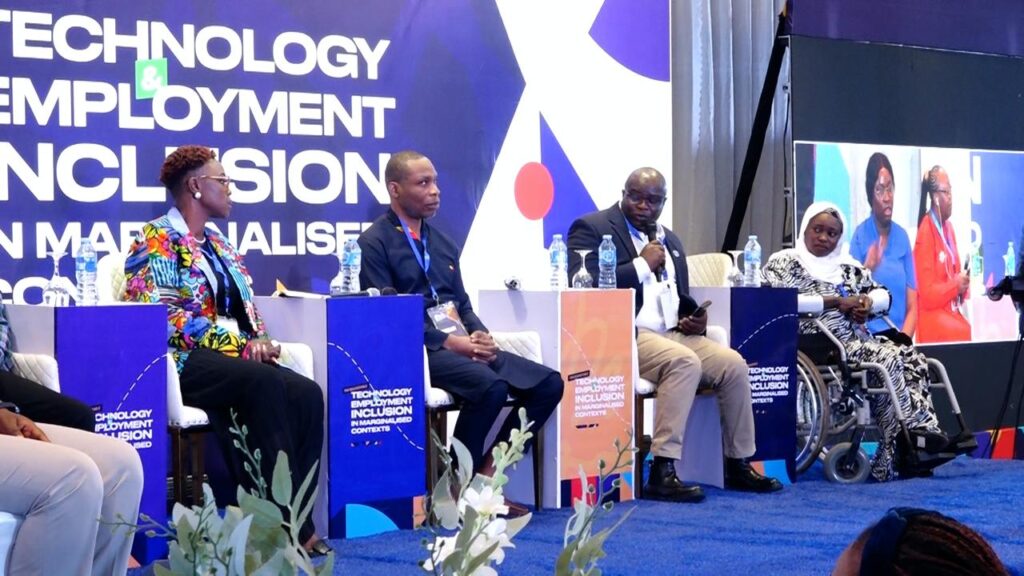


The stakeholders made the call at a one-day roundtable on “Technology and Employment Inclusion in Marginalised Contexts” research report In Abuja.
The roundtable was organised by Mastercard Foundation in collaboration with Jobberman, a subsidiary of The Africa Talent Company (TATC),under the Young Nigeria Works programme.
The event identified the structural, cultural and technological barriers hindering marginalised people including Persons With Disabilities (PWD) from participating in the digital labour market.
It also looked at examining the platforms they could engage, that also assessed their job search behaviours and success rates.
Mr Mohammed Isa, Senior Special Assistant to the President on Special Needs and Equal Opportunities said that PWDs continued to face systemic exclusion from employment opportunities, displaced people disconnected from digital resources and young women in underserved areas were hardly represented in tech-driven spaces.
Represented by Mr Lanre Oloyede, an official in his office, Isa stated that he had always advocated for the implementation of the minimum five per cent employment opportunities for PWDs in public institutions.
“However, we must go a step further and I call for an urgent amendment to the National Disability Act to extend this quota to the private sector.
“No qualified person with a disability should be excluded from contributing meaningfully to our economy,” he said.
Ms Hilda Kabushenga, Chief Executive Officer of TATC, said that in the course of their research, it was discovered that 65 per cent of women in marginalised areas could access jobs via WhatsApp.
Kabushenga said that technology was evolving and it was time for job platforms to include features with adaptive technologies for marginalised people, PWD.
“The question now becomes, how do you move away from big websites, from courses that require big Gigabytes of data to something a little more accessible.
“One of the things Jobberman has done is that we have all our courses available on WhatsApp, it costs 200 Megabytes in terms of data accessibility, it is voiced, it is presented in graphics, it’s a lot user friendly.
“If we are developing technology for people within marginalised context, think about what’s most accessible to them in terms of audibility, accessibility and usage.
“As we are thinking about policies and programmes, bring marginalised people to the Centre of these conversations,” she said.
According to her, governments can incentivise private sector to hire, especially PWDs and those in Internally Displaced Persons homes.
Mrs Rosy Fynn, Country Director, Mastercard Foundation Nigeria, highlighted the foundation’s long-standing commitment to inclusive economic growth.
“This roundtable aligns with our mission to
enable 30 million young Africans, particularly young women, to access dignified and fulfilling work by
- “Inclusion is not a side conversation, it is the main agenda and we must design systems where marginalised groups are not just considered but centred” she said.
Mrs Temi Dalley, Group Executive, Human Capital and Corporate Services, Sterling Financial Holdings Company PLC, said that government must invest in digital infrastructure and inclusive policies.
“It starts with economic and financial reforms to empower our currency, which in turn makes smart phones more accessible and affordable.
“Businesses must embed inclusion in their technology, hiring and supply chains, while NGOs and educators must equip people with digital skills for real-world jobs,” Dalley said.
She called on tech developers and designers to build their applications and websites with equity and empathy.
Mr Olamide Adeyeye, Country Head of Programmes, Jobberman, said they were leveraging WhatsApp to connect employers to job seekers in the marginalised context irrespective of geographical barriers.
Bilikis Yakubu, Advocacy for Women With Disability Initiative, called for an inclusive policy implementation of digital literacy among PWDs, ensuring that digital tools were less expensive.
News Agency of Nigeria (NAN) reports that part of the research findings included that nearly nine in ten employers do not recruit from marginalised groups.
55 per cent of PWDs and 44 per cent of women in IDP groups had secured jobs, while 31 per cent successfully got clients on WhatsApp.
The report also revealed that 85 per cent of Nigerian schools were not equipped for PWDs and 61 per cent of such people age 13 to 18, were likely to be out of school, among other findings.
The Federal Government, Mastercard Foundation and Jobberman have called for policies to ensure the employment of marginalised groups in the country.
The stakeholders made the call at a one-day roundtable on “Technology and Employment Inclusion in Marginalised Contexts” research report In Abuja.
The roundtable was organised by Mastercard Foundation in collaboration with Jobberman, a subsidiary of The Africa Talent Company (TATC),under the Young Nigeria Works programme.
The event identified the structural, cultural and technological barriers hindering marginalised people including Persons With Disabilities (PWD) from participating in the digital labour market.
It also looked at examining the platforms they could engage, that also assessed their job search behaviours and success rates.
Mr Mohammed Isa, Senior Special Assistant to the President on Special Needs and Equal Opportunities said that PWDs continued to face systemic exclusion from employment opportunities, displaced people disconnected from digital resources and young women in underserved areas were hardly represented in tech-driven spaces.
Represented by Mr Lanre Oloyede, an official in his office, Isa stated that he had always advocated for the implementation of the minimum five per cent employment opportunities for PWDs in public institutions.
“However, we must go a step further and I call for an urgent amendment to the National Disability Act to extend this quota to the private sector.
“No qualified person with a disability should be excluded from contributing meaningfully to our economy,” he said.
Ms Hilda Kabushenga, Chief Executive Officer of TATC, said that in the course of their research, it was discovered that 65 per cent of women in marginalised areas could access jobs via WhatsApp.
Kabushenga said that technology was evolving and it was time for job platforms to include features with adaptive technologies for marginalised people, PWD.
“The question now becomes, how do you move away from big websites, from courses that require big Gigabytes of data to something a little more accessible.
“One of the things Jobberman has done is that we have all our courses available on WhatsApp, it costs 200 Megabytes in terms of data accessibility, it is voiced, it is presented in graphics, it’s a lot user friendly.
“If we are developing technology for people within marginalised context, think about what’s most accessible to them in terms of audibility, accessibility and usage.
“As we are thinking about policies and programmes, bring marginalised people to the Centre of these conversations,” she said.
According to her, governments can incentivise private sector to hire, especially PWDs and those in Internally Displaced Persons homes.
Mrs Rosy Fynn, Country Director, Mastercard Foundation Nigeria, highlighted the foundation’s long-standing commitment to inclusive economic growth.
“This roundtable aligns with our mission to
enable 30 million young Africans, particularly young women, to access dignified and fulfilling work by
- “Inclusion is not a side conversation, it is the main agenda and we must design systems where marginalised groups are not just considered but centred” she said.
Mrs Temi Dalley, Group Executive, Human Capital and Corporate Services, Sterling Financial Holdings Company PLC, said that government must invest in digital infrastructure and inclusive policies.
“It starts with economic and financial reforms to empower our currency, which in turn makes smart phones more accessible and affordable.
“Businesses must embed inclusion in their technology, hiring and supply chains, while NGOs and educators must equip people with digital skills for real-world jobs,” Dalley said.
She called on tech developers and designers to build their applications and websites with equity and empathy.
Mr Olamide Adeyeye, Country Head of Programmes, Jobberman, said they were leveraging WhatsApp to connect employers to job seekers in the marginalised context irrespective of geographical barriers.
Bilikis Yakubu, Advocacy for Women With Disability Initiative, called for an inclusive policy implementation of digital literacy among PWDs, ensuring that digital tools were less expensive.
News Agency of Nigeria (NAN) reports that part of the research findings included that nearly nine in ten employers do not recruit from marginalised groups.
55 per cent of PWDs and 44 per cent of women in IDP groups had secured jobs, while 31 per cent successfully got clients on WhatsApp.
The report also revealed that 85 per cent of Nigerian schools were not equipped for PWDs and 61 per cent of such people age 13 to 18, were likely to be out of school, among other findings.